English
 Türkçe
 Ελληνικά
 Deutsch
 ქართული
 العربية

Automated fertilization systems offer innovative solutions that increase productivity in agriculture. They also precisely deliver the nutrients that plants need to the soil. Therefore, the fertilization process is more controlled and balanced. In this case, plants grow healthier with timely nutrient intake. Additionally, preventing water and fertilizer wastage supports eco-friendly agriculture. In this way, costs decrease while efficiency increases, allowing farmers to manage larger areas efficiently. Therefore, automated systems are widely used in modern agriculture. In this case, a more sustainable production is achieved compared to traditional fertilization methods. Moreover, sensors and control units monitor fertilization processes instantaneously. Therefore, less use of chemicals on farmland is encouraged.
Table of Contents
- Fertilization and Irrigation Automation
- Advantages of Automated Fertilization Systems
- What is Fertigation?
- Advantages of Fertigation Method
- Automatic Fertilization System Usage Areas
- Conclusion
- Frequently Asked Questions
Fertilization and Irrigation Automation
Fertilization and irrigation automation is an innovative way to increase productivity in modern agriculture. Moreover, the water and nutrients needed by plants are precisely managed. Therefore, excess water and fertilizer are prevented from being applied to the soil. This saves resources and reduces environmental impact. Furthermore, thanks to automated systems, plants are watered at the right time and grow healthier. This improves crop quality and minimizes water and fertilizer wastage. Furthermore, sensors measure soil moisture and nutrient status instantly. Therefore, farmers can make controlled applications by determining the amount needed.In this case, labor costs decrease, and agricultural processes become more efficient. Additionally, remote-controlled systems save time, enabling effective management of large-scale farms.

Advantages of Automated Fertilization Systems
The advantages of automated fertilization systems increase productivity and sustainability in agriculture. In addition, plants receive the nutrients they need in the right amount and at the right time. Therefore, environmental impacts are reduced by preventing excess fertilizer use. In this case, soil structure is preserved, ensuring long-term productivity. Additionally, sensors measure soil nutrient needs instantly, optimizing fertilization and reducing costs. Furthermore, automated systems reduce the need for labor and save time. Therefore, farmers are able to manage their farming operations more effectively. In this case, agricultural processes modernize, minimizing errors. Additionally, proper fertilizer distribution enhances crop quality, boosting yields and economic gains. Furthermore, automation systems enable remote control. Therefore, farmers can monitor agricultural processes in different areas at the same time.

What is Fertigation?
Fertigation is an agricultural method that enables the application of liquid fertilizer together with the irrigation system. It also delivers the nutrients needed by plants directly to the root zone. Therefore, fertilizer use becomes more efficient and losses are minimized.In this case, agricultural productivity rises while costs drop. Additionally, fertigation optimizes water use, maintaining soil nutrient balance for sustainable production. Moreover, the automatic control of the system reduces the need for labor. Therefore, farmers can manage the fertilization process more easily and accurately. In this case, plant development is supported by optimizing the timing of nutrients. It can also be integrated with drip irrigation or sprinkler systems, offering a wide range of applications. In this way, it can be applied both in open field agriculture and in greenhouse production.

Advantages of Fertigation Method
Fertigation is an efficient agricultural technique that integrates fertilizer application together with irrigation. It also optimizes the nutrient uptake of plants in the best way. Therefore, losses are reduced because the fertilizer reaches directly to the root zone. In this case, nutrients are distributed more homogeneously, ensuring balanced growth. Furthermore, the simultaneous application of water and fertilizer significantly reduces labor. In this way, time and cost savings are achieved in agricultural production. Furthermore, by integrating with drip irrigation systems, water is used more efficiently. Therefore, it contributes to the conservation of water resources and supports sustainable agriculture. In this case, nutrients are evenly distributed, enhancing yields and ensuring sustainable production. Moreover, product quality improves while minimizing environmental impact. Moreover, unnecessary fertilizer use is prevented, reducing environmental impact.

Automatic Fertilization System Usage Areas
Automatic fertilization systems offer innovative solutions that increase productivity in agricultural production. It is also applied in different production areas such as open field agriculture and greenhouse cultivation. Therefore, the nutrients needed by plants are provided in a controlled manner. In this case, fertilizer losses are minimized and cost savings are achieved. Furthermore, water and nutrient management is optimized by integrating with modern irrigation systems. In this way, the growth process of plants is more balanced. Furthermore, automatic fertilization is widely used in orchards and viticulture. Therefore, the seasonal nutrient needs of the plants are accurately met. In this case, high quality and high yield crops are obtained. Furthermore, automatic fertilization in hydroponic systems provides a great advantage. In this way, nutrients are delivered directly to the root zone, accelerating plant growth. It also offers time savings by reducing the labor force in large-scale agricultural enterprises.

Conclusion
Automated Fertilization Systems are an important technological innovation that increases the productivity of modern agriculture. It also optimizes the development process by providing the nutrients that plants need at the most appropriate time. Therefore, it offers an effective solution to ensure sustainability in agricultural production. In this case, it both prevents fertilizer waste and minimizes environmental impacts. It also contributes to the efficient use of water resources and protects soil health. In this way, plants grow healthier and product quality improves. In addition, automation technologies reduce the need for labor and lower costs. Therefore, it is becoming a preferred method in large-scale agricultural enterprises. In this case, it supports both ecological balance and agricultural productivity. Moreover, with advancing digitalization, Automatic Fertilization Systems will become more common. As a result, they provide a sustainable agricultural model economically and environmentally.
Frequently Asked Questions
How does fertilization and irrigation automation work? Water and nutrients are applied at specified rates through sensors and automatic control systems.
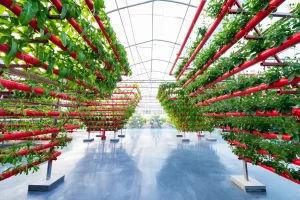
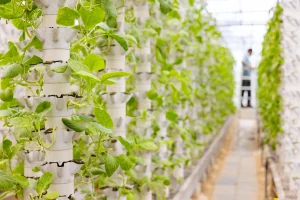
In which types of agriculture is fertilization and irrigation automation used? It can be used in greenhouses, open agricultural areas, orchards and vertical farming applications.
What are the advantages of automated fertilization and irrigation systems? It offers advantages such as saving water and fertilizer, reducing labor costs and increasing productivity.
Are these systems effective on all soil types? They can be adapted to most soil types, but the appropriate fertilization program should be determined based on soil analysis.
What is the difference between fertigation and conventional fertilization? Fertigation increases yield by delivering fertilizer directly to the root zone of the plant, while conventional fertilization is applied more superficially.
With which irrigation systems can fertigation be used? It can be applied together with drip irrigation, sprinkler and micro irrigation systems.
How do automatic fertilization systems work in greenhouse farming? In closed systems, the amount of fertilizer is precisely adjusted with sensors and programmable control units.
Can automatic fertilization be applied in vertical farming systems? Yes, fertigation systems with water-based nutrient solutions are ideal for vertical farming.
What are the long-term economic advantages of fertigation systems? They reduce costs through reduced fertilizer use, reduced labor and water savings.
How do these systems contribute to the conservation of water resources? By preventing water waste, only as much water and fertilizer is used as the plants need.